Category: Latest from the Blog

Journal #5 – February – Preparing for hatching.

Journal #5 – February – Preparing for hatching.

Early February, temperatures are still low, our spawners have been on artificial photoperiod for a month already, the fruit-based feeding protocol continues, but we are approaching breeding and dietary requirements change again , a support with the supplement “Reproduction from the turdus specialist line based on vitamins E,B vitamins, carneitin and arginine stimulate sperm production and courtship activity of males increasing fertility.

Read more →
Diary #2 – December – Cold days, fruit the solution

Diary #2 – December – Cold days, fruit the solution

We have long since entered the depths of winter, the days are cold, and the calorie consumption of breeding stock is constantly changing according to the temperatures as well; we can notice this because they tend to feed more. This need is due to the increased demand for carbohydrates and sugars, which help the complex physiological mechanism of ‘ homeothermia, or the process of regulating body temperature.

Read more →
The photoperiod for turdid breeding.

The photoperiod for turdid breeding.

Artificial photoperiod scheduling allows us to control the breeding season by bringing the season forward, increase the birth rate.
It is important to remember that if these techniques are applied irrationally and with maximum force, they are detrimental to the welfare and health of the birds. The spectrum of optical radiation ranges from 10/2 nm of the ultraviolet (UV) spectrum to 10/6 nm of the infrared (IR) spectrum. This wavelength is divided into seven bands :UV-C, UV-B, UB-A, visible light, IR-A, IR-B, IR-C.The UV-B band of natural sunlight allows the conversion of 7-dehydrocholesterol to 1,25 dihydrocholecalciferous vitamin D3,which is then reabsorbed by the skin or ingested during pen care.

Read more →
Feeders

Feeders

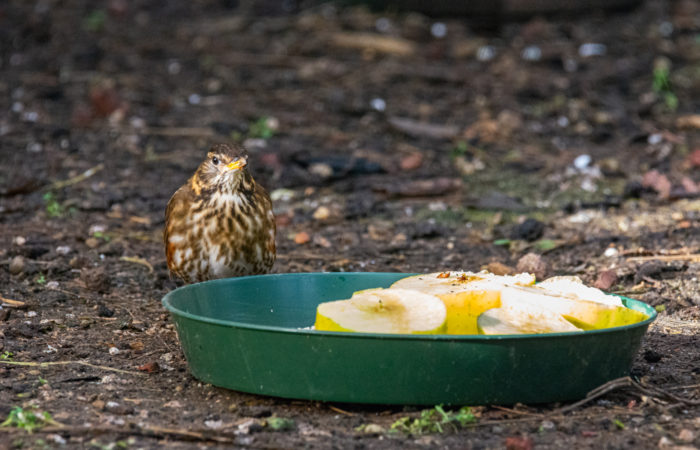
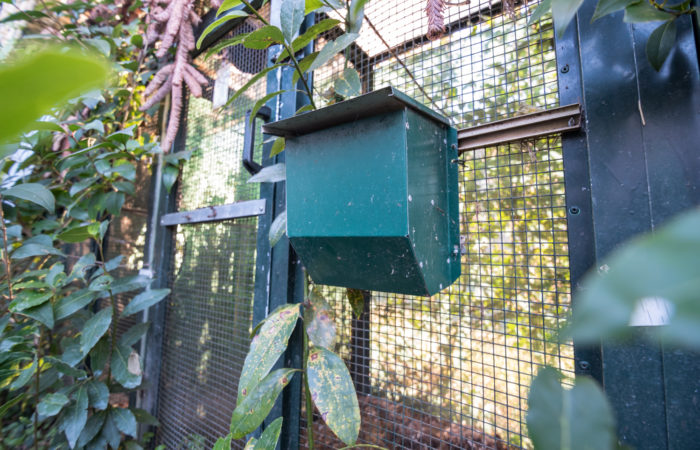
The feeders to be set up inside the aviary in larger saucers on the ground, remember that turdids by their nature tend to feed on the ground, they are generally accustomed with left-right movements of the head, to move their beaks in the feeders, movements that facilitate the escape of the same and thus the waste and thus prevent it from settling for a long time deteriorating and could also be an attraction to small pests ( rats, mice, and small bacteria caused by the deterioration) obviously sheltered from the rain, so better with a plastic or sheet metal canopy, this also avoids contamination from possible bird droppings.
Periodically cleaning the saucers and feeders is recommended for better hygiene and prevention from possible dirt-related problems.

Diary #0 – The Beginning

Diary #0 – The Beginning

I have been breeding turdids for about 20 years the intent of this small journal is to share my ornithological experiences with you. In addition to being of interest to future breeders who frequently find themselves asking me for advice on breeding management, it may engage hunting enthusiasts and naturalists to learn more about these beautiful winged creatures.

Read more →
Water is the troughs

Water is the troughs

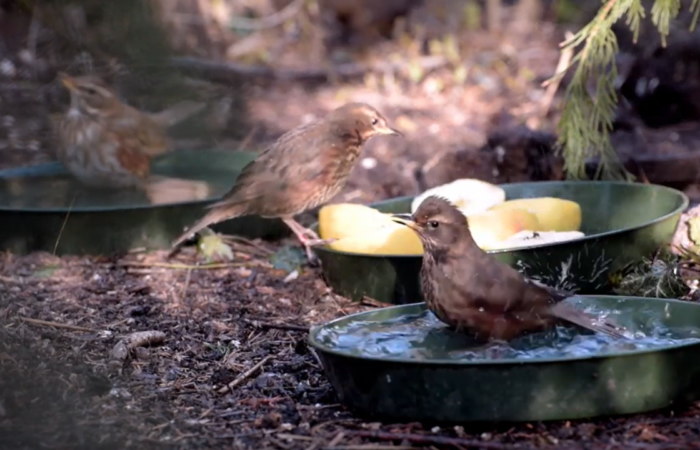
Clean water is the essential element for raising turdids, water for drinking, bathing, and nest building with mud. We will be able to provide it in simple saucers placed on the ground. Water is therefore very important, we will have to pay close attention to the daily change that we can make with a simple watering can. Once a week I recommend dilution administration of 20ml per liter of apple cider vinegar water.

Read more →
The ideal environment for breeding turdids

The ideal environment for breeding turdids

The ‘ideal environment for raising and breeding turdids is the aviary. Such species in fact both because of their size ( length and wingspan) and habits need space to be able to fly, nest, in short “inhabit.” As I previously mentioned, thrushes need space, both because of their size and because of their habits in the wild. If we opt for fixed pair breeding, our aviaries must have at least the following minimum dimensions: 2 meters long by 2 meters high. Of course, such data are derived from my own experience and that of breeders with whom I have exchanged views and ideas on the subject.

Read more →
X