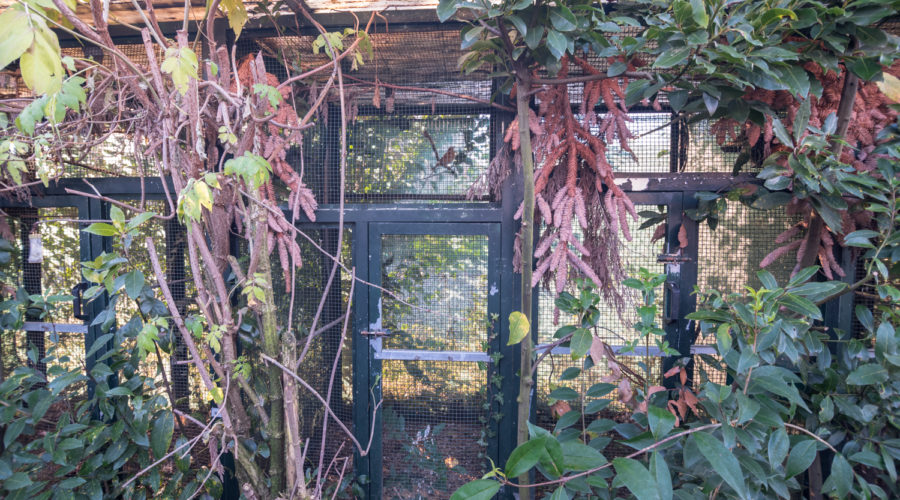
The ‘ideal environment for raising and breeding turdids is the aviary. Such species in fact both because of their size ( length and wingspan) and habits need space to be able to fly, nest, in short “inhabit.” As I previously mentioned, thrushes need space, both because of their size and because of their habits in the wild. If we opt for fixed pair breeding, our aviaries must have at least the following minimum dimensions: 2 meters long by 2 meters high. Of course, such data are derived from my own experience and that of breeders with whom I have exchanged views and ideas on the subject.
There are cases where thrushes have hatched in smaller aviaries, but I would like to point out to fellow enthusiasts and breeders measures that also take animal welfare into consideration. First of all, the outdoor aviary or aviaries should be made in such a way as to avoid disturbance to our breeding stock, possibly sheltered from the wind and possible predators(rats, mice, snakes, birds of prey, etc…) Also to be considered is the presence of the sun, aviaries should be made in positions that make the most of the sun’s rays. The sun is one of the main elements as exposure allows the synthesization of vitamin D. Of course, turdids also live and breed ( although in a worse way) in indoor aviaries, that is, made in rooms, agricultural outbuildings etc. Aviaries are generally made with a wooden or iron frame, if desired also of aluminum. I generally advise against the use of wood as it is easily deteriorated and unhygienic : in fact, it is not possible to sterilize a wooden structure. The nets on the market are of various types, I recommend the galvanized one or the plasticized one for greater durability. The dimensions are approximately 12 by 12 mm. It is essential that the farmer, over the years, always carefully check the net and repair any breakage immediately.
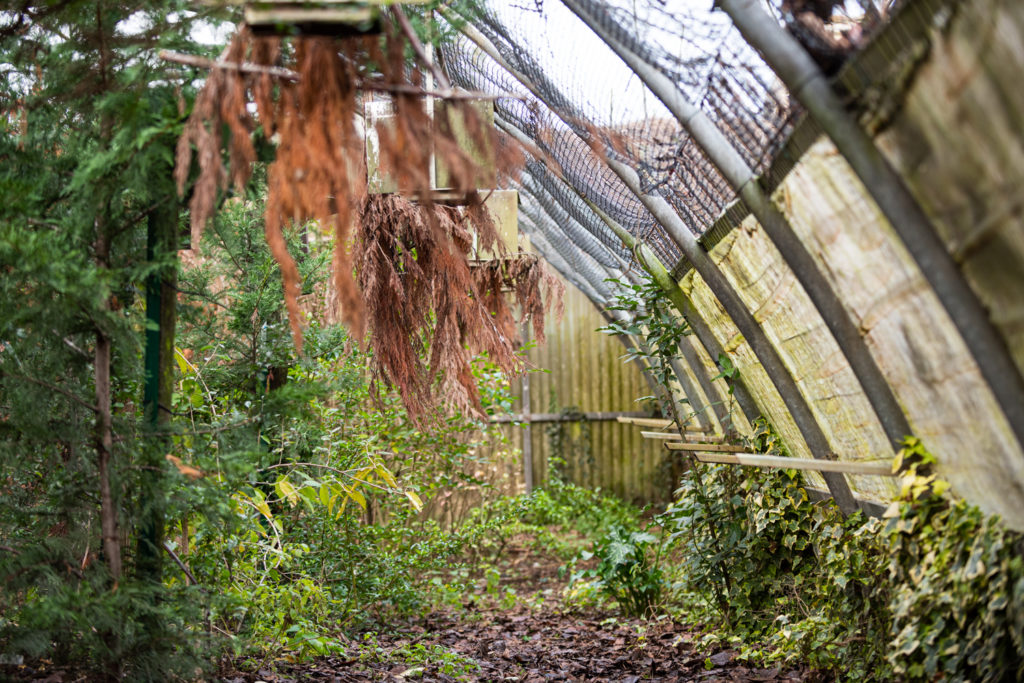
Having performed the basic structure, it is necessary to think about the roofing. The best would be to cover the aviary about halfway( so about a meter or so) so as to allow sunlight and rain to flow in. It is advisable to have a natural soil bottom, this is often used for the construction of the nest itself and we will have the ‘care to keep it moist( especially during periods of no rain). It is important to dig about six inches underneath our aviary and place a tightly woven wire mesh to prevent intrusion by rats, mice or other predators. Once we have done the covering and placement of the bottom netting we will have to take care of planting plants inside the aviary to provide some privacy and at the same time beautify our aviary. We recommend evergreen plants such as laurel cerasus or Leilandi thuia, which are easy to maintain and durable. If we opt to make several aviaries, it is a good idea to mask the sides of the aviaries with panels or shading to avoid eye contact of the breeding stock, ensuring their privacy and preserving possible territorial quarrels among them. 
Once this is finished we will take care of the placement of the wicker baskets ( recommended size for thrushes is 17cm diameter), we will place them in easy to inspect places, but at the same time we will try to disguise them with fake or real material to give a sense of greater security to our breeders.
