Category: Guide – How to get started

The Pathologies of Malnutrition

The Pathologies of Malnutrition

Malnutrition Pathologies can be diverse, but all can be traced to deficient dietary imbalances.

Those most frequently encountered is the:

Hypovitaminosis A
Vitamin A deficiency is in fact the most frequent cause of malnutrition in birds, and while it affects several species of birds, it particularly affects those turdids fed unbalanced feeds or “pushed” with do-it-yourself feeds.

Symptoms related to hypovitaminosis A are numerous and include: slimming, recurrent infections at the level of the gastric and respiratory district, sinusitis, hypertrophy of the sublingual gland presence of whitish nodules and plaques at the level of the oral cavity, ulcerations and hyperkeratosis at the level of the limbs.

Such symptoms related to the history alone can point us toward a diagnosis of hypovitaminosis A, which can be confirmed by a liver biopsy (to assess vit. A levels).

Clearly, therapy consists of dietary correction, which must contemplate doses of vit. A of about 4000 IU/kg of food.

HOW TO PREVENT.

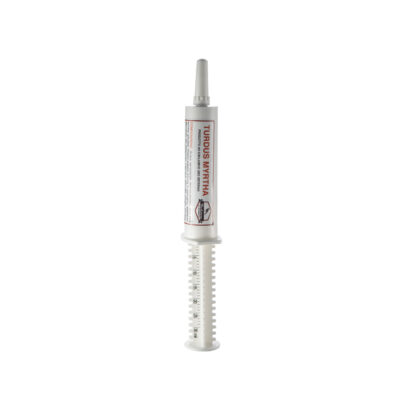
The turdus specialist immune line supplement based on plant extracts with immunomodulatory and antimicrobial action, is ideal for improving the immune response, stress( especially for those subjects housed in aviaries), in transport, quarantine and in the case of infectious diseases. Adjuvant in the treatment of infections of the digestive system ( goiter, stomach and intestine) it contains prebiotics that can promote the development of beneficial microbial flora in the gastroenteric aparatus of turdids.

TURDUS LEUCAGEL is a truly innovative dermatological gel characterized by a powerful antimicrobial action, guaranteed by Tea Tree Oil (extracted from the plant Melaleuca alternifolia) and extracts of aloe vera and propolis.

The presence of vegetable oils (wheat germ, sweet almonds, thyme, Scots pine) in the composition of TURDUS LEUCAGEL further enhance the antimicrobial action and at the same time promote the regeneration of damaged skin, accelerating the healing processes.

The synergistic action of the various components make TURDUS LEUCAGEL an excellent adjuvant in the treatment of numerous skin infections of bacterial, fungal and viral nature.

TURDUS LECAGEL has shown remarkable efficacy in the treatment of plantar abscess (“bumblefoot”) in birds at various stages of development, as well as being used successfully in numerous avian skin conditions such as dermatitis, burns, pecking, trauma and abscesses.

The product also finds application as an adjunct in the treatment of self-trauma sores. The unpleasant taste of TURDUS LEUCAGEL also prevents the animal from removing the dressing by licking and continuing the pathological behavior of self-traumatization.

TURDUS LEUCAGEL is easily applied to the part to be treated, thanks to the convenient dispensing syringe, in a thin layer, once-twice a day until healed.

Recommended Products

Melanism in turdids

Melanism in turdids

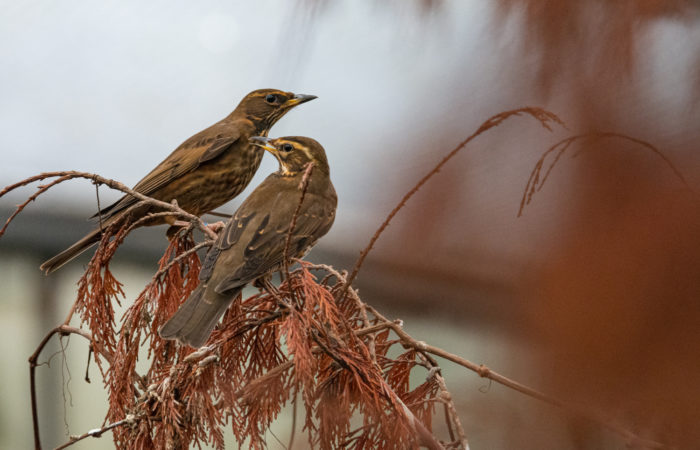
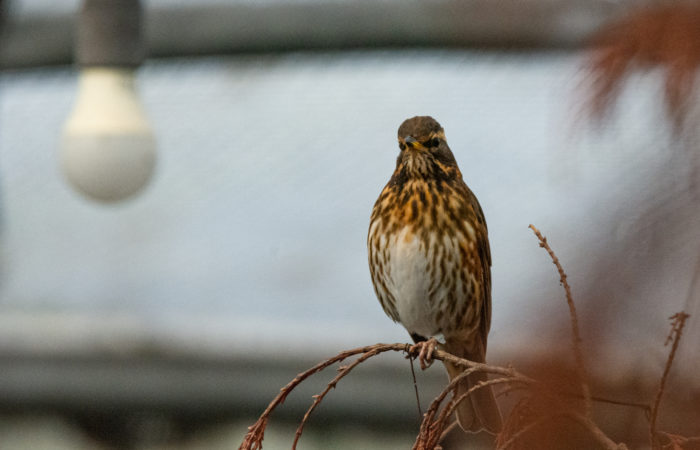
Some clarity on Melanism (photo shows redwing (turdus iliacus) dark phenotype present in breeding.

PLUMAGE COLORATION AND THE CAUSES OF THE ABNORMALITY


The polychromatic appearance of the birds is due to the presence of special substances that are deposited in the feather structure during its growth.

The main pigments (organic coloring products of purely metabolic origin) present in the structure of the plumage are: melanins (substances responsible for black, gray, brown, tawny and dark-yellow coloration) and carotenoids (which give yellow, orange, red and, very rarely, blue-violet).

The blue and azure hues are normally produced by “optical,” not bio-chemical means; in practice, the presence of these colors depends on the particular way in which light is reflected from the surface of feathers and feathers. This is also how the numerous iridescences and “metallic” and “bronze” reflections arise.

Finally, the manifold variety of shades depends on how the different dyes and reflective areas are distributed in the right doses and in the right places.

In some cases this natural pigment arrangement does not occur according to traditional patterns and then, occasional individuals exhibit abnormal, but often aesthetically pleasing liveries, at least to human eyes.

These specimens exhibit their characteristic aberrant appearance from birth; this happens because the real cause of the coloration abnormalities is directly related to the erroneous development of the growing chick, still inside the egg.

In practice, the organism produces the coloring substances in quantities either too small or too abundant compared with those present in the metabolism of “normal” individuals; the excess or deficient synthesis of these substances is the essential difference that allows the distinction of the various main types of chromatic aberration.

The origin of the hypo- or hyper-production of pigment (which generates the abnormality) is inherent, in turn, in a mutant genetic code, whose random variations at the chromosomal or amino acid level, are reflected in bizarre development and, generally, abnormal metabolism (this abnormality in the bio-chemical functioning of the organism can be so far-reaching as to become lethal; this is why many “mutants” are aborted before birth).

CHROMATIC ABERRATIONS: THE “BASIC” TYPES

Coloration abnormalities fall into two broad categories: if a specimen’s organism produces the coloring substances in smaller amounts than usual we will have (depending on how small the actual amount of pigment produced is) Isabellism, Leucism or Albinism; if, on the contrary, too many substances are accumulated in the pens we will have (depending on the type of pigment overflow) Melanism or Erythrism

Sometimes the abnormality is uniform over the whole body, other times it occurs in scattered patches. In addition, the parts not covered by feathers (beak, legs, eyes, and any patches of bare skin) show the same aberrations exhibited by the plumage, as they contain the same coloring substances present in the feathers.

Melanism and Erythrism

Unlike the cases previously seen, Birds affected by these genetic abnormalities possess an exaggeratedly abundant amount of dark pigment, which is deposited in the structure of the most superficial tissues.

Melanic specimens appear uniformly dark (partial melanism is rarer than complete melanism) even where, in typical individuals, light, white, grayish or yellowish hues normally predominate.

Erythrism consists simply of the predominance, over other coloring substances, of darker carotenoids, which, together with melanins, generate a plumage that is (usually) uniformly and exaggeratedly reddish, brown or, even, purplish. Among the various forms of chromatic aberration, erythrism is certainly one of the rarest and most peculiar.
The photoperiod for turdid breeding.

The photoperiod for turdid breeding.

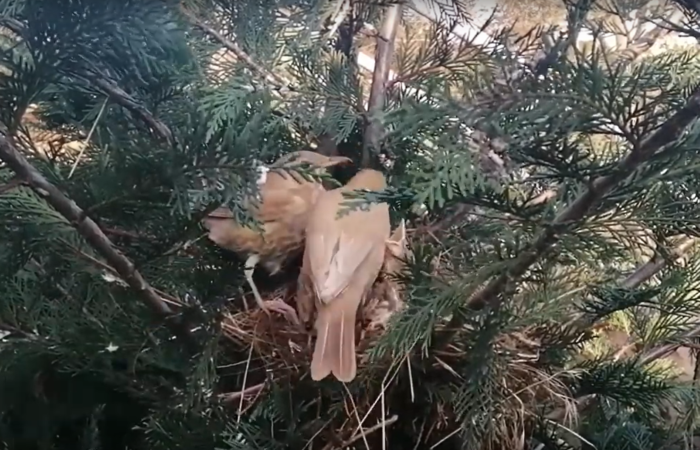
Artificial photoperiod scheduling allows us to control the breeding season by bringing the season forward, increase the birth rate.
It is important to remember that if these techniques are applied irrationally and with maximum force, they are detrimental to the welfare and health of the birds. The spectrum of optical radiation ranges from 10/2 nm of the ultraviolet (UV) spectrum to 10/6 nm of the infrared (IR) spectrum. This wavelength is divided into seven bands :UV-C, UV-B, UB-A, visible light, IR-A, IR-B, IR-C.The UV-B band of natural sunlight allows the conversion of 7-dehydrocholesterol to 1,25 dihydrocholecalciferous vitamin D3,which is then reabsorbed by the skin or ingested during pen care.

Read more →
Feeders

Feeders

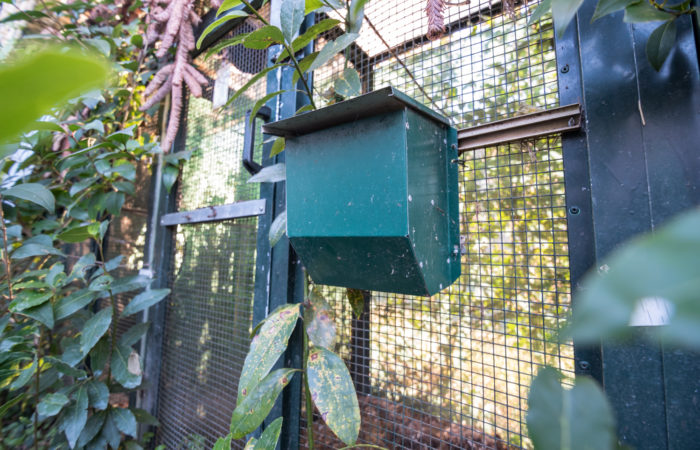
The feeders to be set up inside the aviary in larger saucers on the ground, remember that turdids by their nature tend to feed on the ground, they are generally accustomed with left-right movements of the head, to move their beaks in the feeders, movements that facilitate the escape of the same and thus the waste and thus prevent it from settling for a long time deteriorating and could also be an attraction to small pests ( rats, mice, and small bacteria caused by the deterioration) obviously sheltered from the rain, so better with a plastic or sheet metal canopy, this also avoids contamination from possible bird droppings.
Periodically cleaning the saucers and feeders is recommended for better hygiene and prevention from possible dirt-related problems.

The ideal environment for breeding turdids

The ideal environment for breeding turdids

The ‘ideal environment for raising and breeding turdids is the aviary. Such species in fact both because of their size ( length and wingspan) and habits need space to be able to fly, nest, in short “inhabit.” As I previously mentioned, thrushes need space, both because of their size and because of their habits in the wild. If we opt for fixed pair breeding, our aviaries must have at least the following minimum dimensions: 2 meters long by 2 meters high. Of course, such data are derived from my own experience and that of breeders with whom I have exchanged views and ideas on the subject.

Read more →
Water is the troughs

Water is the troughs

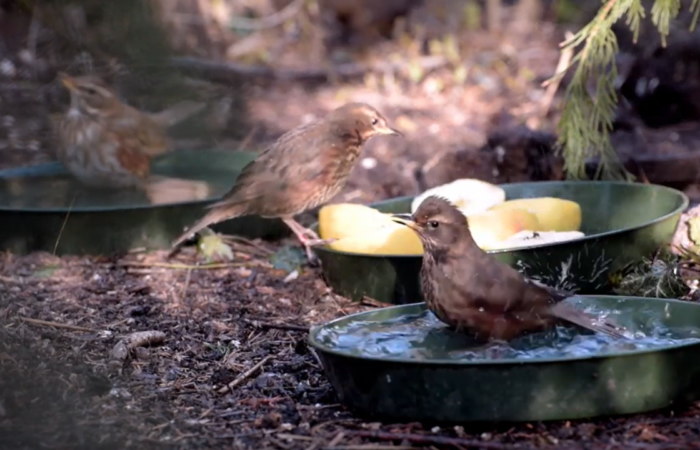
Clean water is the essential element for raising turdids, water for drinking, bathing, and nest building with mud. We will be able to provide it in simple saucers placed on the ground. Water is therefore very important, we will have to pay close attention to the daily change that we can make with a simple watering can. Once a week I recommend dilution administration of 20ml per liter of apple cider vinegar water.

Read more →
X