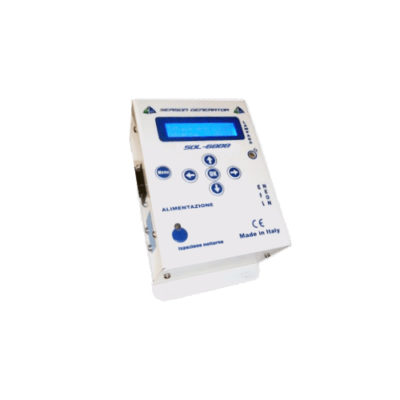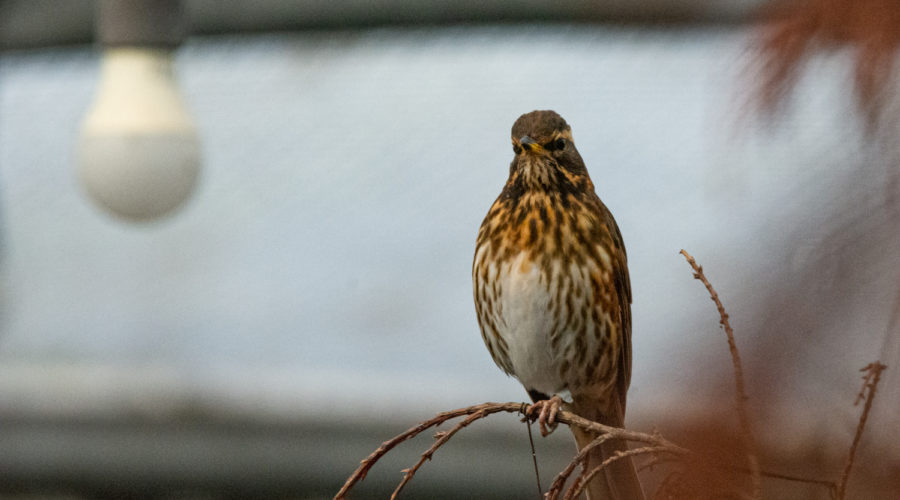
Artificial photoperiod scheduling allows us to control the breeding season by bringing the season forward, increase the birth rate.
It is important to remember that if these techniques are applied irrationally and with maximum force, they are detrimental to the welfare and health of the birds. The spectrum of optical radiation ranges from 10/2 nm of the ultraviolet (UV) spectrum to 10/6 nm of the infrared (IR) spectrum. This wavelength is divided into seven bands :UV-C, UV-B, UB-A, visible light, IR-A, IR-B, IR-C.The UV-B band of natural sunlight allows the conversion of 7-dehydrocholesterol to 1,25 dihydrocholecalciferous vitamin D3,which is then reabsorbed by the skin or ingested during pen care.
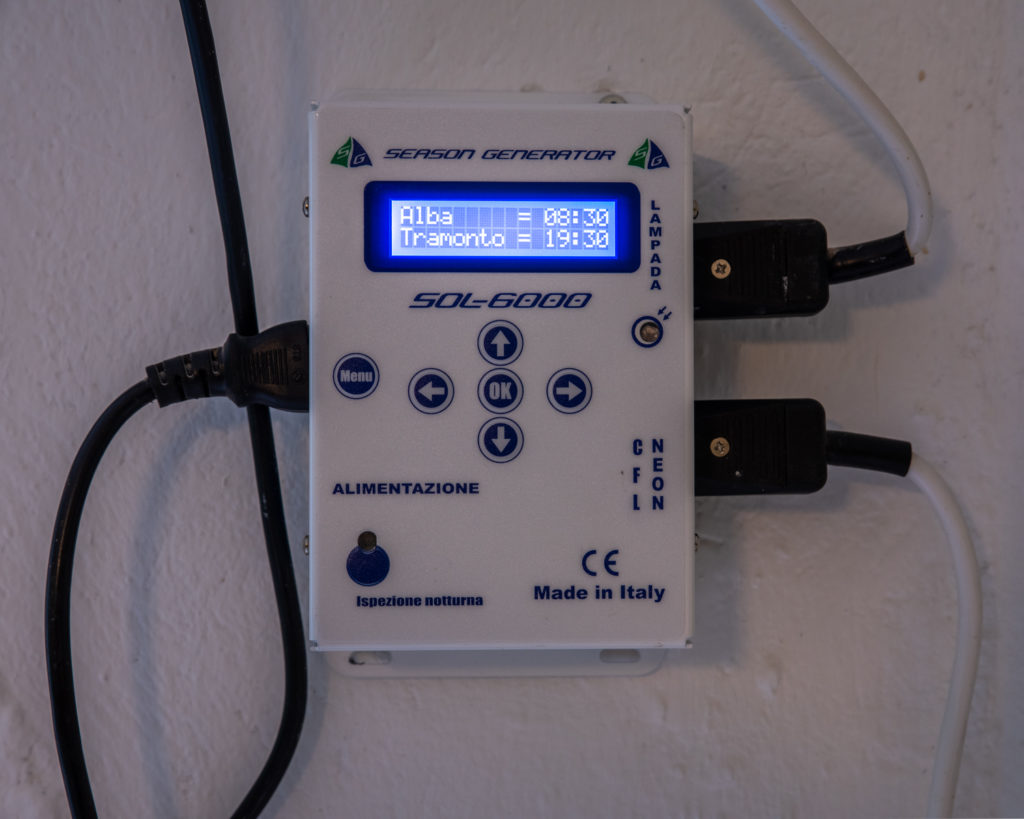
Vitamin D3 is very important for calcium metabolism. A minimum intensity ( 50 to 1000 lux = light intensity / m2 ) is required. Light intensity gives us an ‘indication of the amount of light produced per second. Adding up the light intensity of all the lamps in a room and dividing by the square meters will give us an idea of the amount of lux. Sunlight produces approximately 150 lux. Normal fluorescent lamps do not produce continuous light, but oscillate like a strobe, about 50 times per second(50HZ). The ‘human eye discerns this frequency, and the effect of this on bird behavior is not well known. The strobing effect of fluorescent light probably causes stress and adversely affects the overall condition of the animals.Among the biggest problems in breeding should be considered those due to errors in the manipulation of the light cycle. Birds need a minimum of 13-14 hours of light to begin breeding. If the duration of light is subject to fluctuations, birds receive conflicting hormonal messages, which can result in early moulting and interrupted reproduction. Normally birds start breeding when the following requirements are met: photoperiod stimulation, sexual maturity, good health, proper nutrition, acceptable partner, presence of nest and nest material, and adequate privacy. Retinal photoreceptors stimulate the hypothalamus via the optic nerve, hormones released by the hypothalamus stimulate the adeinohypophysis to produce gonadotropins, which in turn stimulate the gonads to release sex hormones.
VEDI ALCUNI PRODOTTI CHE POTREBBERO INTERESSARTI